
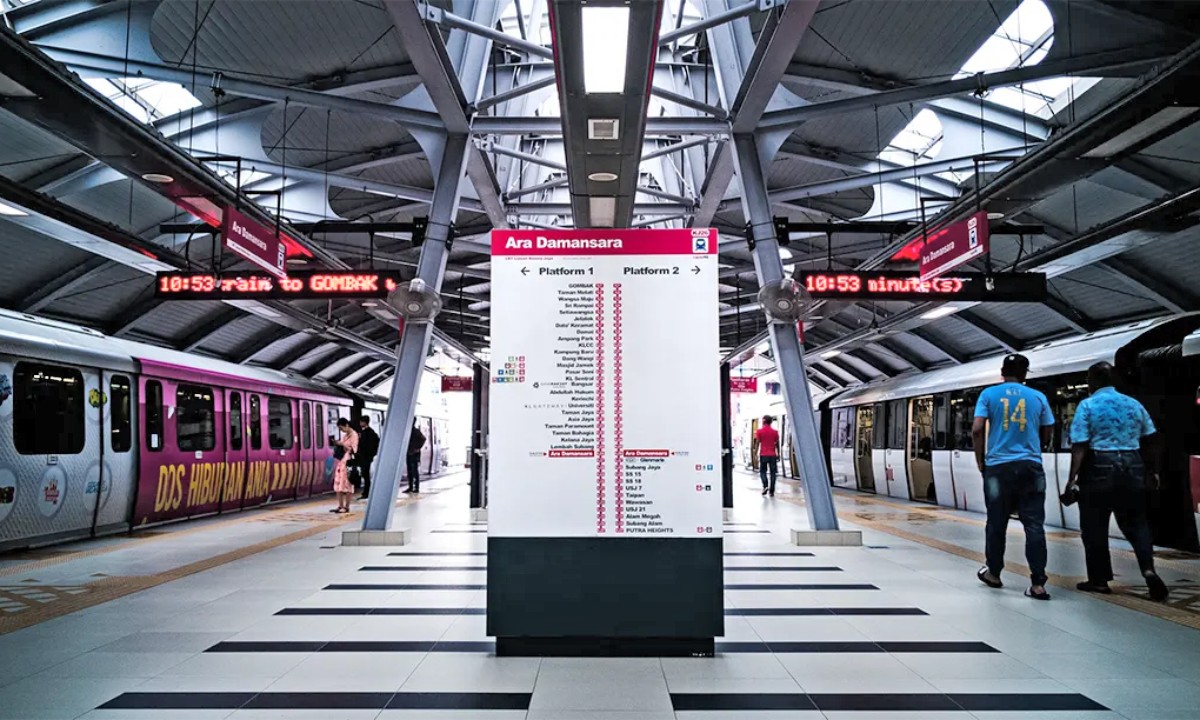
This guide is written for first-time buyers and those buying their second property. It is not specific to any single project — the frameworks here apply to any transit-oriented property purchase in Malaysia.
⚠️ Important Notice
This guide is for general informational and educational purposes only. Nothing in this article constitutes financial advice, investment advice, legal advice, or a recommendation to purchase any specific property.
Hartamas Real Estate is a licensed real estate agency. We are not licensed financial advisors or investment advisors. Any data, figures, or examples in this article are presented for educational context only and should not be relied upon as the basis for any financial or investment decision.
Before making any property purchase decision, please seek independent advice from a qualified financial advisor, a registered property valuer, and a qualified property lawyer.
TLDR — What First-Time LRT Property Buyers Need to Know
| Question | Short Answer |
|---|---|
| Is “near LRT” enough reason to buy? | It’s a strong factor — but location, developer, price, and tenure all matter equally |
| Freehold or leasehold? | Freehold gives better long-term exit flexibility; leasehold can work at the right price in the right location |
| Commercial title vs residential title? | Know the difference — primarily affects utility costs and Bumi discount eligibility |
| What is HDA and why does it matter? | It protects you as a buyer — regulates payment schedule, defect liability, and delivery |
| How do I check if the price is fair? | Compare PSF (not total price) against comparable completed projects nearby |
| What should I ask about the developer? | Whether they’ve completed a similar project in the same area — and what it looks like vs what they promised |
| What’s the biggest mistake first-time buyers make? | Comparing total price without normalising for size, or buying based on renders without checking the developer’s delivery record |
Table of Contents
- Why LRT Property Matters — and What the Data Shows
- The Difference Between “Near LRT” and “Walkable to LRT”
- Freehold vs Leasehold — What It Actually Means for Your Purchase
- Understanding Commercial Title and HDA Protection
- How to Compare Properties Using PSF
- How to Evaluate a Developer Before You Sign
- The 5 Questions to Ask Before Any New Launch Purchase
- A Worked Example: Applying the Framework in Ara Damansara
- Common Mistakes First-Time Buyers Make
- FAQ
- About Hartamas Real Estate
Why LRT Property Matters — and What the Data Shows
“Buy near the LRT” is one of the most commonly repeated pieces of property advice in Malaysia. Like most commonly repeated advice, it contains real truth but leaves out the nuance that determines whether you actually make a good decision.
Here is what the data shows about transit-oriented housing in Malaysia:
Ridership on established LRT lines is large and consistent. The LRT Kelana Jaya Line in PJ recorded monthly ridership between 6.2 million and 7.7 million in 2024 (Prasarana official data). This is not a declining line — it carries consistent, large-scale commuter demand month after month.
What consistent ridership tells you about housing demand: People who depend on public transport for their daily commute make an active, practical choice to live within walking distance of their station. They are not making a lifestyle preference — they are solving a daily logistics problem. This creates a recurring, need-driven pool of tenants in walkable-to-station housing that tends to be more stable than demand driven by sentiment or lifestyle trends alone.
The caveat: “Near LRT” does not automatically mean stronger rental demand or capital appreciation. A poorly maintained property with bad management in a declining area near an LRT station will still underperform. Transit access is a multiplier on other location and property fundamentals — not a substitute for them.
The Difference Between “Near LRT” and “Walkable to LRT”
This distinction matters significantly for rental and resale positioning, and most property marketing glosses over it.
Near LRT typically means within 1–2 km of a station. At that distance, most people drive or take a bus to the station rather than walking. This creates a dependency on car ownership or connecting transport — which reduces the premium a tenant places on the LRT proximity.
Walkable to LRT means the station is reachable on foot in under 5 minutes, ideally via a covered or sheltered path. At this distance, residents genuinely don’t need a car to use the LRT. This is where the practical demand premium accrues.
Covered versus uncovered matters in Malaysia. A 5-minute walk in direct sun or rain is a genuine deterrent. A covered walkway to a station meaningfully increases the utility of LRT proximity for a broad range of tenants — particularly those who don’t drive, the elderly, families with children, and professionals who commute in work attire.
Practical guidance for buyers: When an agent says a property is “near LRT,” ask specifically:
- How many metres to the station entrance?
- Is the route covered or sheltered?
- Is the walkway through the development’s own pathway, or along a public road?
These specifics determine whether the LRT proximity genuinely reduces your tenant’s car dependency — or just looks good in the marketing.
Freehold vs Leasehold — What It Actually Means for Your Purchase
This is the question most first-time buyers ask early — and often don’t get a fully clear answer on.
The Definitions
Freehold: You own the land with no expiry. The title remains perpetually in your ownership (and your successors’) until you choose to sell.
Leasehold: The government leases the land to the developer, who in turn sells to you. The lease is typically 99 years in Malaysia, and — critically — the clock starts from the date the land was alienated (granted) by the government, not the date you purchase the property. A property sold to you in 2025 as “99-year leasehold” may already have 10–30 years of its lease consumed if the land was alienated a decade or two ago.
Why the Lease Start Date Matters
When you eventually want to sell your leasehold property, your buyer’s bank will assess the remaining lease tenure when determining the maximum loan tenure they will offer. As remaining tenure shortens, loan tenure shortens — which increases monthly repayments for your buyer and reduces the pool of buyers who can afford to purchase from you.
This is not an immediate concern for a property with 60+ years remaining. It becomes a practical concern as tenure approaches 40–50 years. For a long hold or a property already mid-lease when you buy it, this deserves careful modelling.
The Honest Caveat
Leasehold is not inherently a bad investment. Location quality, demand level, and price matter more than tenure alone. Many leasehold properties in well-connected, high-demand areas in Malaysia have delivered strong returns. The key question is: what are you comparing, and at what price?
If a freehold property and a leasehold property are available in the same area at the same PSF — freehold generally offers more exit flexibility over time. If the leasehold option is significantly cheaper and in a demonstrably better location, the calculus can shift.
What to Check When Buying Leasehold
- Ask for the land title document — confirm the original alienation date, not just the remaining stated tenure
- Calculate how many years will remain when you plan to sell (your holding period + remaining tenure at purchase)
- Model whether your intended buyer in 10–15 years will face financing constraints from remaining tenure
Understanding Commercial Title and HDA Protection
In Malaysia, property can carry either residential or commercial land title. This affects two practical things for buyers: utility bills and statutory protections.
Residential Title
- Utility bills (electricity, water) billed at residential tariff rates — lower
- Bumi discount applicable (for eligible buyers)
- Standard for landed homes and most stratified condominiums
Commercial Title
- Utility bills billed at commercial tariff rates — higher than residential
- Bumi discount not applicable
- Standard for serviced apartments, SoHo units, and most mixed-use residential developments
For a 700–800 sqft serviced apartment, the utility tariff difference is typically estimated in the range of RM100–200/month compared to a residential title equivalent — though actual costs vary significantly with usage.
The HDA Factor — Why It Matters More Than Most Buyers Realise
Here is where the picture becomes more nuanced, and where many buyers get confused.
Commercial title alone (without HDA) offers fewer statutory protections. The developer has more flexibility on payment schedules, delivery timelines, and defect rectification.
Commercial title under HDA (Housing Development Act) is a different matter. When a serviced apartment is sold under HDA, buyers receive the same statutory protections that apply to most condominiums in Malaysia, regardless of the land title being commercial:
- Regulated progressive payment schedule: You pay in stages tied to construction milestones. The developer cannot demand lump-sum or front-loaded payments.
- Defect Liability Period (DLP): The developer is legally required to rectify defects notified within the DLP after vacant possession — typically 24 months.
- Delivery timeline protection: If the developer fails to deliver within the contracted period, buyers have statutory recourse under the Housing Development (Control & Licensing) Act.
When a developer markets a serviced apartment as “commercial title under HDA,” check that the Sales and Purchase Agreement (SPA) is indeed governed by HDA. If in doubt, have a property lawyer review the SPA before signing.
For first-time buyers: The practical implication is that most reputable serviced apartment developments in urban PJ, KL, and Selangor are sold under HDA regardless of commercial title — which means you have strong buyer protections. The main trade-off is the higher utility tariff. Factor this into your monthly budget.
How to Compare Properties Using PSF
Price per square foot (PSF) is the correct metric for comparing any two properties. Comparing total prices without normalising for size leads to systematically poor comparisons.
The Basic Calculation
PSF = Total price ÷ Built-up area in square feet
Example:
- Property A: RM600,000, 600 sqft → RM1,000 PSF
- Property B: RM800,000, 1,000 sqft → RM800 PSF
Property B is cheaper per square foot. Property A feels cheaper but is actually more expensive for what you’re getting.
Why PSF Matters for Investment Buyers Specifically
For investment purposes, rental income is closely related to size (measured in PSF) — not to what you paid in absolute terms. A unit that cost you RM1,000 PSF needs to earn proportionally more rental per square foot to achieve the same yield as a unit that cost RM800 PSF.
The yield connection:
If both units rent at RM3.50 PSF/month:
- Property A (RM1,000 PSF): RM3.50/RM1,000 = 4.2% gross yield
- Property B (RM800 PSF): RM3.50/RM800 = 5.3% gross yield
Same rental rate. Different yield — because of the PSF entry difference.
How to Use PSF to Evaluate Whether a Price Is Fair
- Find at least 3–5 comparable completed units in the same area, similar size and specifications
- Calculate the PSF for each
- Calculate the average PSF in the area
- Compare your target property’s PSF against this average
If the new launch is launching at PSF significantly above area completed comparables — understand why before buying. Sometimes a premium is justified (newer facilities, better location within the area, LRT proximity). Sometimes it isn’t.
Where to Find Comparable PSF Data
- PropertyGuru — search completed units in the area for sale, filter by bedroom type, note transaction and listing prices
- iProperty — similar function
- JPPH (Jabatan Penilaian dan Perkhidmatan Harta) — official government property transaction data, searchable online. Slower to update but based on actual transacted prices rather than asking prices
How to Evaluate a Developer Before You Sign
Off-plan property purchases carry one risk that resale purchases do not: you are committing capital to something that does not yet exist. The developer’s execution record is therefore a critical variable.
The Render vs Reality Test
This is the most practical check first-time buyers can do:
- Find a completed project by the same developer, ideally in a similar market segment and location
- Find their original marketing renders from before that project was built
- Compare the renders to actual photos of the completed project
What you’re looking for: do the major elements — entrance, lobby, gymnasium, pool, corridor design — match what was shown in the renders? Significant deviations are a warning sign. Strong alignment is evidence (though not a guarantee) that the developer delivers what they show.
You can usually find original renders through old news articles, property portals, or the developer’s own archive materials. Actual photos are available from residents, Google Maps street view, and social media.
Other Developer Track Record Checks
Delivery history: Has the developer completed projects on schedule? Malaysian property purchases under HDA have statutory timelines — delays are documented in media and property community forums.
Defect handling: Ask in owner Facebook groups or property forums about the defect rectification experience for previous projects. Developers who are responsive to defect claims after handover are meaningfully better than those who are not.
Financial standing: A developer’s financial health affects whether they can complete. Check if the project has a bridging financier (project financing from a bank, which provides a layer of oversight) — sometimes mentioned in the SPA or project documentation.
The 5 Questions to Ask Before Any New Launch Purchase
These questions apply to any new launch in Malaysia — not just LRT-adjacent properties in PJ.
Question 1: Has this developer completed a similar project in this area before?
Not just “has this developer built before” — specifically, have they built in this area, for this type of product, and completed it? A developer with a 30-year track record in Johor Bahru commercial property is not automatically de-risked for a luxury condominium in KL.
Question 2: What are comparable completed units in this area actually renting for right now?
Go to PropertyGuru. Search for completed units of similar size and specification in the same area. Record the asking rent range. Calculate PSF. This is public data anyone can access, and it gives you the most reliable forward indicator for rental potential — more reliable than any projection a developer or agent provides.
Question 3: Who specifically will want to rent this unit — and why here rather than somewhere else?
Name the actual tenant. Why does this specific address, with this specific LRT access, at this specific rent level, appeal to that tenant type specifically? If you cannot articulate a specific answer, the demand assumption needs more work.
Question 4: Is the PSF entry competitive against area comparables?
Compare the new launch PSF against completed units in the same area. Where does it sit — at, below, or above area comparable PSF? Above-median entry has a higher hurdle for capital appreciation and compresses yield margin.
Question 5: What are you being asked to plan for honestly?
Every purchase has considerations worth understanding in advance. For new launches specifically: completion timeline, ongoing costs during the pre-completion period, commercial vs residential title implications, and any area-specific factors like highway proximity or access road conditions.
A developer or agent who cannot give you a clear, honest answer to this question is a signal in itself.
A Worked Example: Applying the Framework in Ara Damansara
To make these frameworks concrete, here is how they apply to a current new launch in Ara Damansara — Arra Residences by Puncak Dana, which Hartamas Real Estate is marketing.
Note: We are the marketing agent for this project. We include it as a worked example because it illustrates the framework well — but apply the same questions to any project you evaluate.
Q1 — Developer track record in this area?
Puncak Dana has completed 6 projects in Ara Damansara specifically since 2002, including Citta Mall (2010, still operating), AraTre’ Residences (2022, sold out), and Myara Park (completing Q1 2026, 95% sold). We compared AraTre’ renders from 2018 to actual photos from 2022 across 4 elements — entrance, lobby, gymnasium, pool. All matched.
Q2 — Current rental market?
Based on PropertyGuru asking rent listings for completed 2BR units in the area: the average asking rate across 7 comparable projects is approximately RM3.56 PSF, translating to approximately RM2,500/month for a 721 sqft unit. Applying this to a RM490,000 purchase price gives an illustrative gross yield figure of approximately 6.1% — for educational reference only. This is based on 2025 asking rents; Arra completes in 2030 and rental conditions at that time cannot be predicted. This is not a projection or guarantee of returns. Readers should discuss any yield modelling with a qualified financial advisor.
Q3 — Specific tenants?
LRT commuters in the Ara Damansara corporate belt. University students taking LRT to Taylor’s, Sunway, Monash. Expat families near ICONS International School (opened February 2025, British curriculum). Aviation industry workers as Subang Airport expands.
Q4 — PSF competitiveness?
Arra launches freehold at ~RM700 PSF. Current freehold comparables in Ara Damansara range from RM780 to RM858 PSF. Arra is below every current freehold comparable. Among leasehold launches, it is also below some (Arcuz at RM850 PSF) and comparable to others (Pinnacle at RM680 PSF leasehold).
Q5 — What to plan for?
Completion Q2 2030 — 54 months from SPA. Commercial title under HDA — higher utility tariffs (standard for all quality serviced apartments in this area). South-facing units have highway proximity; north-facing have quieter residential orientation. Retail anchor tenants at ground level not yet confirmed.
Common Mistakes First-Time Buyers Make
These apply to any property purchase — not just LRT-adjacent or new launch properties.
Comparing total price without PSF normalisation. A RM600,000 unit at 500 sqft is more expensive per square foot than an RM800,000 unit at 1,000 sqft. Always compare PSF.
Trusting developer rental projections without checking real market data. Developers and agents sometimes quote aspirational rental figures. Check PropertyGuru yourself for comparable completed units. The asking rents on the portal are what landlords are actually trying to achieve — a more reliable input than a brochure projection.
Buying based on renders without researching the developer’s delivery record. Renders are designed to sell. The question is whether the developer has a documented history of matching those renders in reality. This is checkable — do the check.
Ignoring the total cost of ownership. Monthly mortgage is only one cost. Factor in maintenance fees, utility tariff (commercial vs residential), property management if using a manager, insurance, and vacancy risk.
Underestimating the pre-completion period. For new launches with 4–5 year completions, you are making progressive payments without rental income for years. This capital has an opportunity cost. Model it explicitly before committing.
Buying in the wrong area at the right price. A competitively priced unit in an area with weak fundamentals — limited employment catchment, poor connectivity, no schools or amenities — can still underperform. Location quality multiplies the effect of good pricing. It does not substitute for it.
Not reading the SPA with a lawyer. The Sales and Purchase Agreement is a legally binding document. First-time buyers especially should engage a property lawyer to review it before signing — not just the developer’s recommended conveyancer. The cost is minor relative to the commitment.
FAQ
What is the minimum income required to buy property near LRT in PJ?
This depends on the property price and loan terms. As a general rule, Malaysian bank mortgage guidelines assess loan eligibility at approximately 1/3 of gross monthly income for total debt service. For a RM490,000 property with a 90% loan (RM441,000), at an indicative rate of 4.5% over 30 years, monthly repayment is approximately RM2,235 — implying a minimum gross monthly income of around RM6,700 based on that debt service ratio. Speak to a bank or mortgage broker for your specific situation; actual eligibility depends on your full financial profile.
Is buying near LRT better for own-stay or investment?
Both. For own-stay buyers, LRT walkability reduces car dependency and commute cost — a genuine quality of life benefit. For investors, LRT walkability supports a broader tenant pool (those who don’t drive, students, young professionals) and tends to reduce vacancy risk. The weight of each benefit depends on your personal use case.
What happens if a developer doesn’t deliver by the SPA deadline?
Under HDA, buyers are entitled to Liquidated Ascertained Damages (LAD) for delay — a daily rate calculated from the SPA price and applicable from the SPA delivery date until the actual delivery date. LAD rates are specified in the SPA itself. Buyers should confirm this clause exists in their SPA before signing.
How do I find out how long a leasehold property has left on its lease?
The leasehold expiry date should be stated on the land title (Geran Pajakan). You can confirm this through a title search at the relevant land registry, typically done through a property lawyer during due diligence. For new launches, the developer should be able to provide this information — ask for it before purchasing.
Is there a difference between “serviced apartment” and “condominium” in Malaysia?
Yes. “Condominium” typically refers to stratified residential property with residential title. “Serviced apartment” refers to stratified residential use under commercial title. The practical differences are utility tariff (as discussed) and Bumi discount eligibility. Legally, both are governed by the Strata Titles Act and, if sold under HDA, both carry equivalent buyer protections.
What is a developer’s defect liability period?
The Defect Liability Period (DLP) is the period after vacant possession during which the developer is legally required to rectify defects notified by the purchaser. Under HDA, the DLP is typically 24 months from the date of vacant possession. Buyers should inspect their unit carefully and submit a formal defect list to the developer as soon as possible after receiving vacant possession keys — do not wait until near the DLP expiry.
About Hartamas Real Estate
Hartamas Real Estate has been involved in property marketing in Malaysia for nearly 30 years, with over RM8 billion in project sales.
We write practical property content because buyers who understand what they’re buying make better decisions — and because the industry has plenty of promotional content and not enough genuinely useful education.
Full Disclaimer
This guide is prepared by Hartamas Real Estate (Malaysia) Sdn Bhd for general informational and educational purposes only.
This guide does not constitute and should not be relied upon as financial advice, investment advice, legal advice, or any other professional advice. Hartamas Real Estate is a licensed real estate agency. We are not licensed to provide investment advice, financial planning services, or valuations.
Any figures used as examples in this article — including illustrative mortgage calculations, yield examples, and PSF comparisons — are presented purely to explain concepts. They are not projections, recommendations, or estimates for any specific property purchase or financial situation.
Property purchases involve risk. The value of property can go down as well as up. Past market trends are not a reliable indicator of future results.
Before making any property purchase decision, readers should conduct their own independent due diligence and seek advice from qualified, licensed professionals — including a financial advisor, a registered property valuer, and a property lawyer.